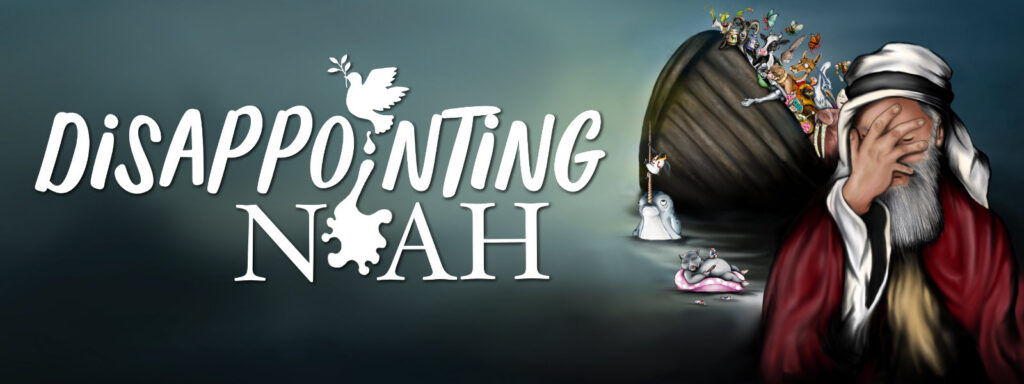
Disappointing Noah began as a loose idea rather than a specific character. I was interested in the humor that comes from imagined rules and quiet transgressions… animals behaving badly in small, human ways, just out of sight of the figure who would disapprove most. Noah isn’t the subject of the work, but his presence hangs over it, shaping each scene without ever appearing in it.
Where the idea came from
The idea grew out of an interest in small transgressions and quiet rule-breaking: some harmless, others less so. Using animals allowed those moments to be framed with a degree of distance, while the implied presence of Noah created a simple moral backdrop. Each image captures a “caught in the act” moment, leaving the weight of the behavior to sit with the viewer rather than resolving it for them.
Humor, restraint, and implication
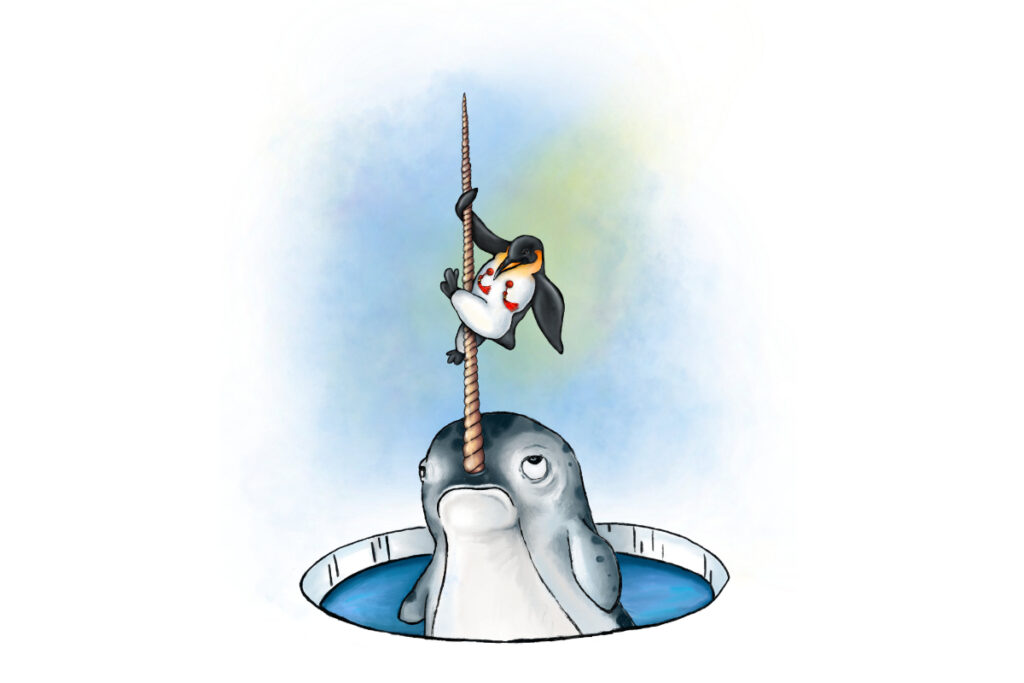
Some of the actions depicted in Disappointing Noah are plainly wrong, not merely suggested. Humor isn’t used to excuse those moments, but to create enough distance for the viewer to engage with them. I’m careful not to escalate things visually or turn them into spectacle; instead, the images remain clean and controlled so the discomfort comes from what’s happening, not from how loudly it’s presented.
Why the series continues
I keep returning to Disappointing Noah because it remains unresolved. The framework is simple, but flexible, and it allows for a wide range of behaviors, tones, and moments without locking the work into a single message. As long as there are small acts of mischief, contradiction, or discomfort worth observing, the series feels open rather than complete.
A selection of Disappointing Noah pieces are available as prints.